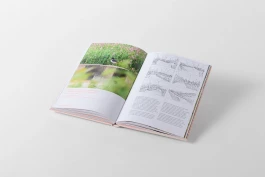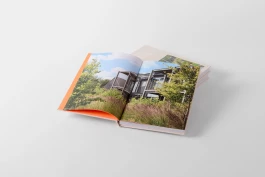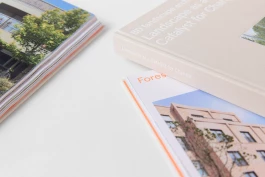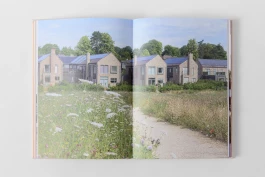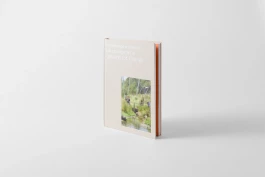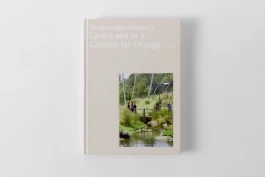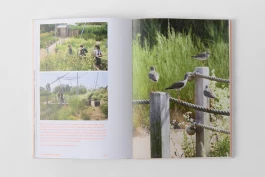
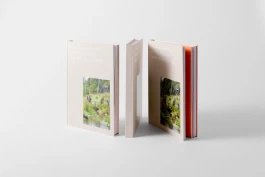
Landscape as a Catalyst for Change presents a cross-section of our award-winning studio featuring 35 showcase projects across 8 chapters worked on over the past 10 years.
The publication moves through our core sectors—public realm, meanwhile uses, housing, educational landscapes, and community-led projects—before closing with a reflection our studio trajectory and the shifting conditions under which landscape architecture is currently practiced in the UK.
Rather than a retrospective in the celebratory sense, the book reads as a survey of recurring questions: how landscapes are made, who they are made with, and what forms of social and environmental repair they can realistically support.
Our book also features 8 articles / research pieces between chapters by notable architects + developers as some of our closest clients + collaborators;
Carol Lees
Hawkins\Brown
Richard Sansom
Landsec
Steve Sanham
Common Projects
Simon Rose
Wetland Wildlife Trust
Andy Puncher
Lateral + Fabrix
Romy Rawlins
DeepGreen
Carl Gulland
John Pardey Architects
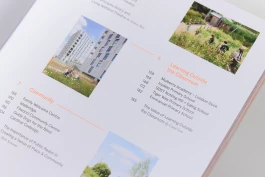
The Introduction is written by Isabel Allen, the Editor of Architecture Today and the Editorial Director of BEAM (Built Environment and Architecture Media), who frames the book against a broader cultural shift in how landscapes are perceived: from sites of pastoral comfort to systems marked by ecological strain.
She argues that landscape architecture now operates within this altered gaze, balancing loss with a new precision about environmental function and human dependency. The introduction positions landscape as both evidence of ecological rupture and a medium through which people recalibrate their relationship with place, seasonality, and civic life. Allen traces precisely where landscape architecture should position itself:
“We are learning to adjust our gaze. To see the freshly mown lawn as an assault on biodiversity. To see the green field as a monocultural wasteland; abandoned by wildlife, poisoned by toxins, a victim of commercial agriculture and its relentless appetites. To see intense sunlight as a weapon, set to warm our oceans, threaten our harvests, scorch our skin.
We are learning to view the landscape through the prism of environmental degradation. But every loss of innocence goes hand in hand with newfound wisdom. We are learning to understand our landscapes as a physical manifestation of our complex co-existence with the natural world.
This book documents a body of work that adds value to development projects, that lifts the spirits, that acts – as the title suggests – as a catalyst for change. But it also paints a portrait of an art form that accentuates the symbiotic relationship between humanity and the natural world; that encourages us to see the world anew.” - Allen