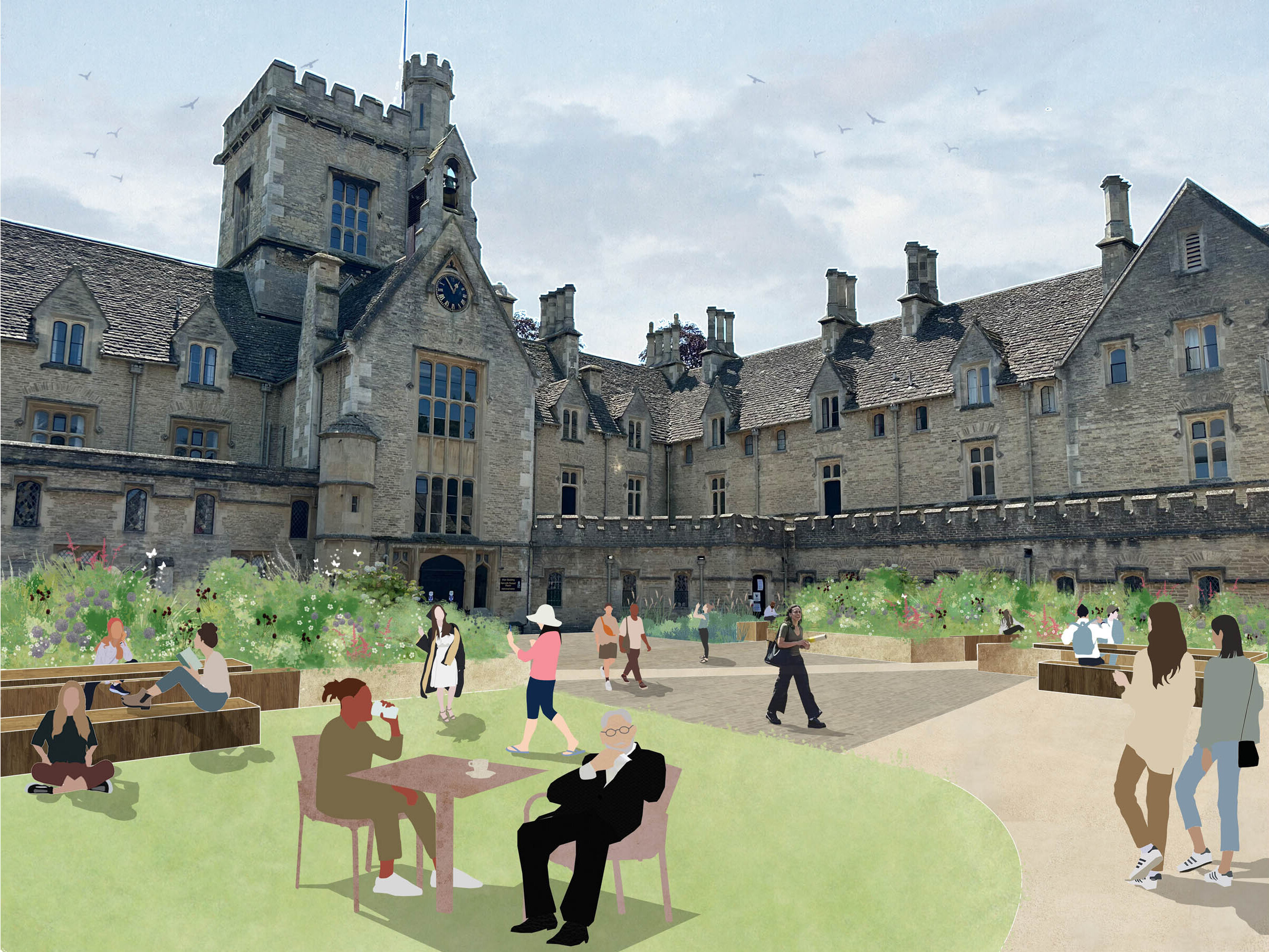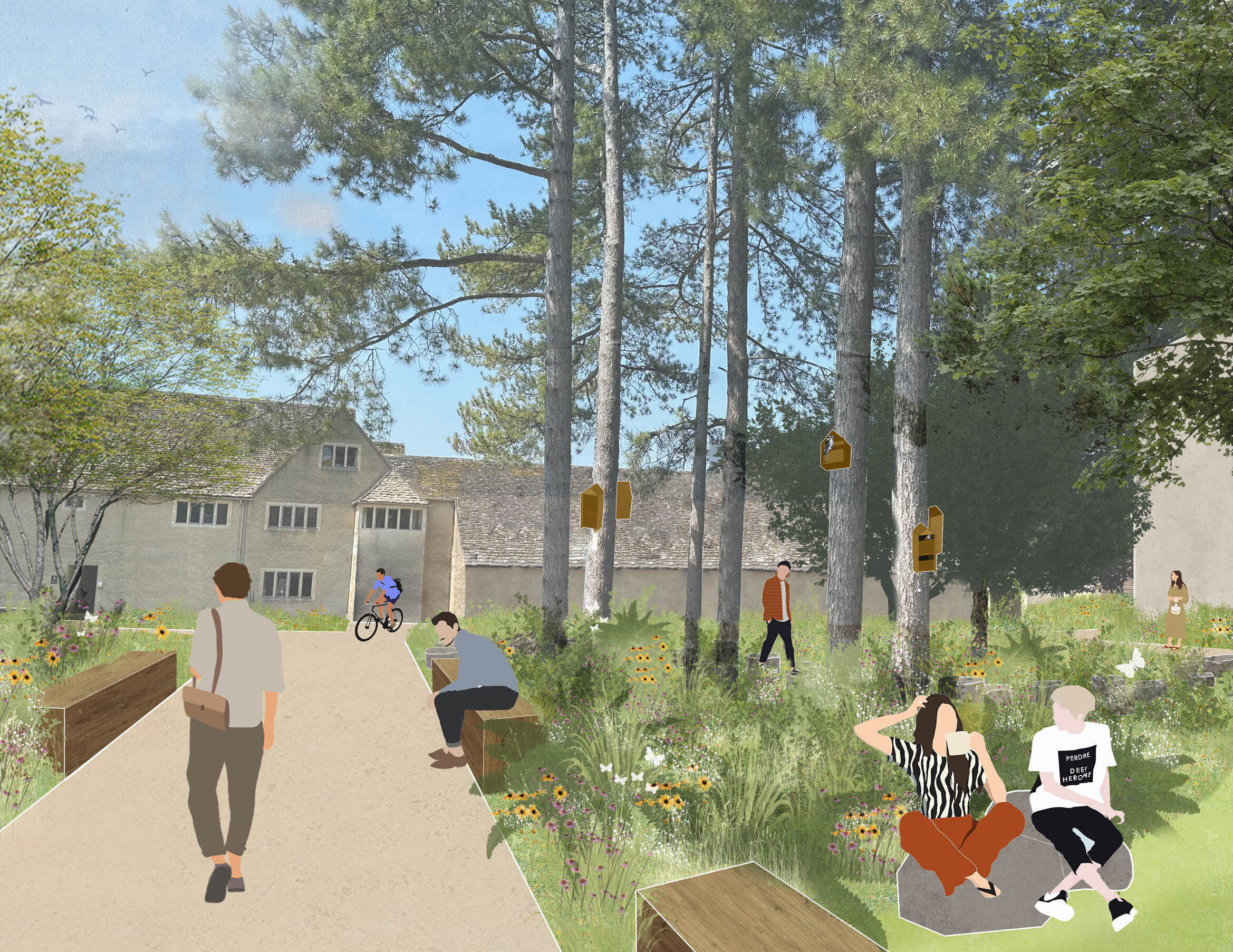
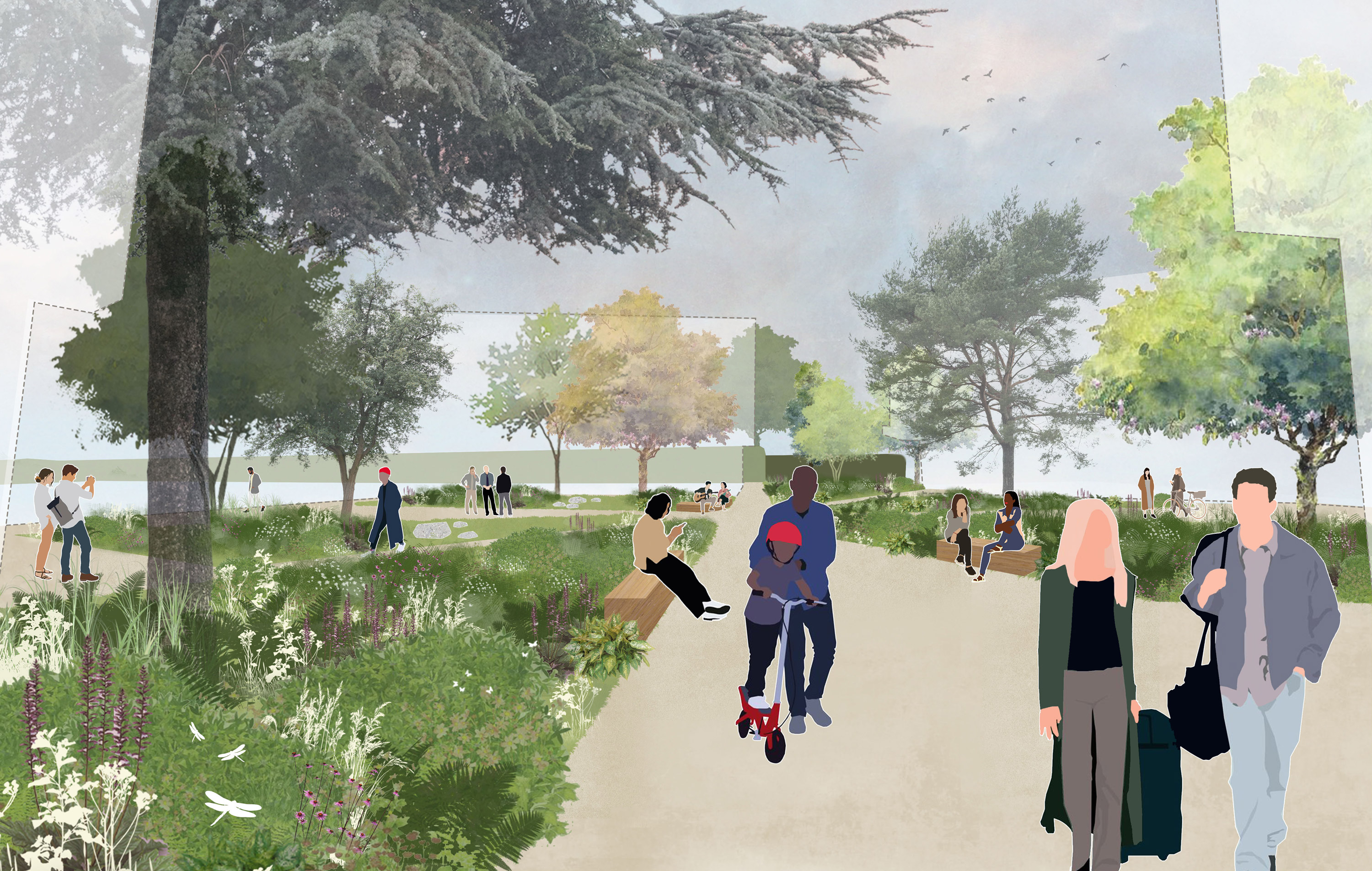
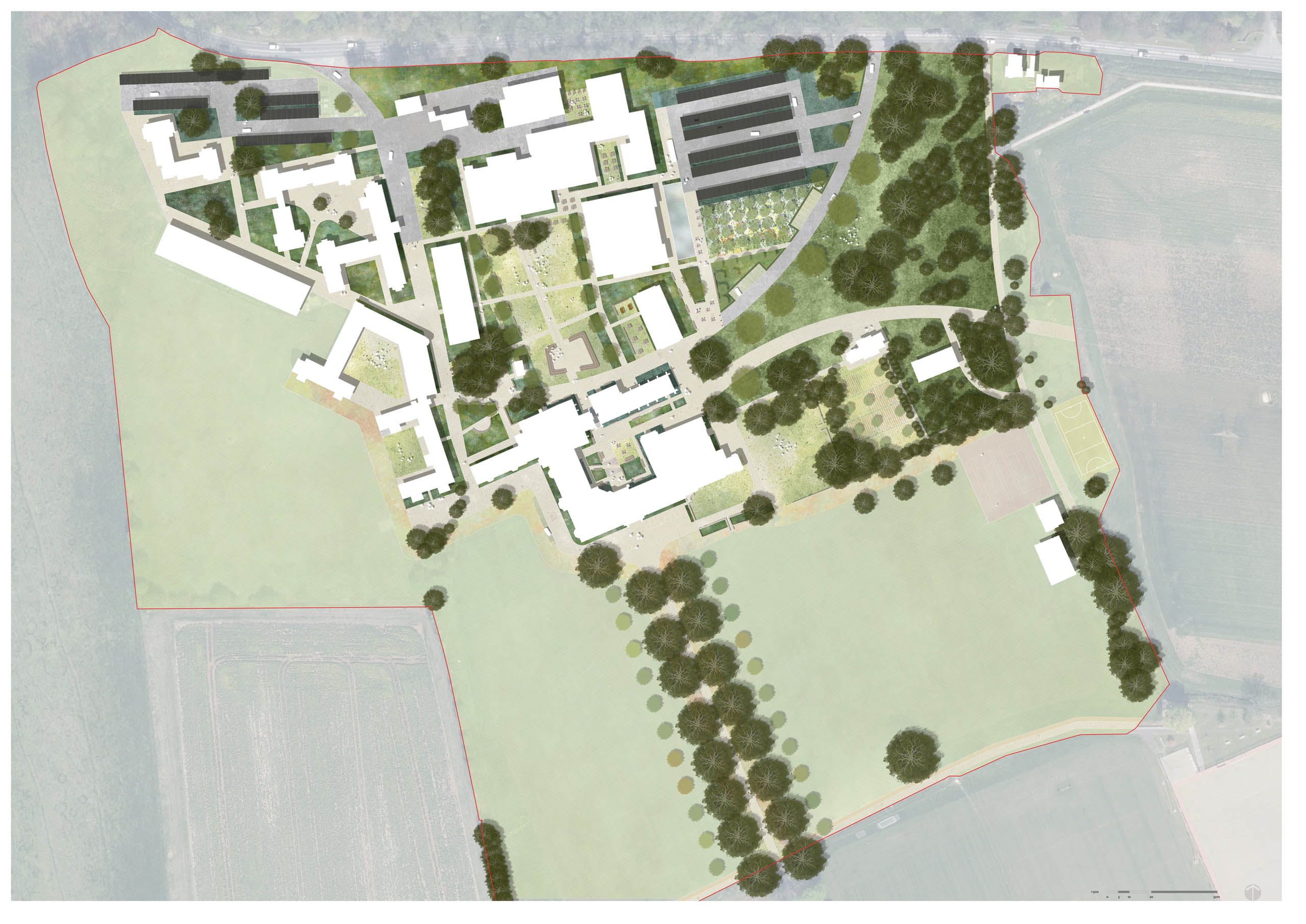
The Royal Agricultural University’s Cirencester campus is the planned home of the groundbreaking ten hectare RAU Innovation Village. This landscape-led reimagining of the existing campus will really push the boundaries of sustainable design – providing a new hub for agricultural, food, and land management entrepreneurs and researchers, amongst a nature-rich landscape. Our brief has been to design a place that is beautiful, carbon neutral, biodiversity rich and inspires innovation through its environment.
The Cirencester campus lies at the edge of the designated Cotswold National Landscape; set amongst mature parkland trees. The remnants of historic ridge and furrow field patterns and the culturally significant University built form provided us with a strong heritage to carefully weave our designs through. These elements all underpinned our landscape strategy, developed in collaboration with the RAU and Passivhaus experts Architype.
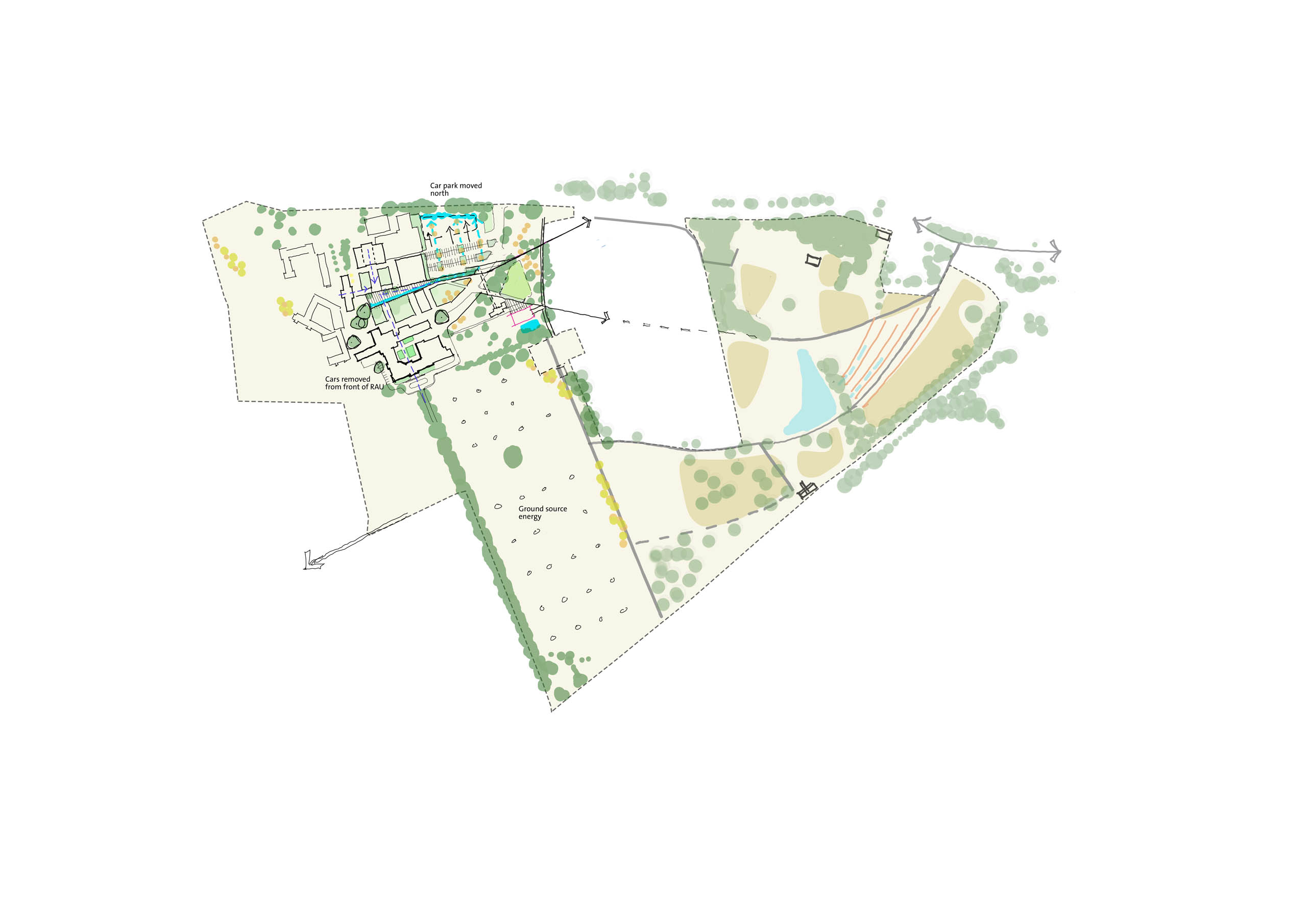
Our initial concepts included reducing the dominance of vehicles onsite; teasing out the many landmark trees and buildings to improve their setting; preserving and enhancing the site’s extensive grassland for biodiversity; and improving wildlife connections through enhanced, joined-up habitats.
The heart of our design’s sustainability credentials are its nature-based solutions.
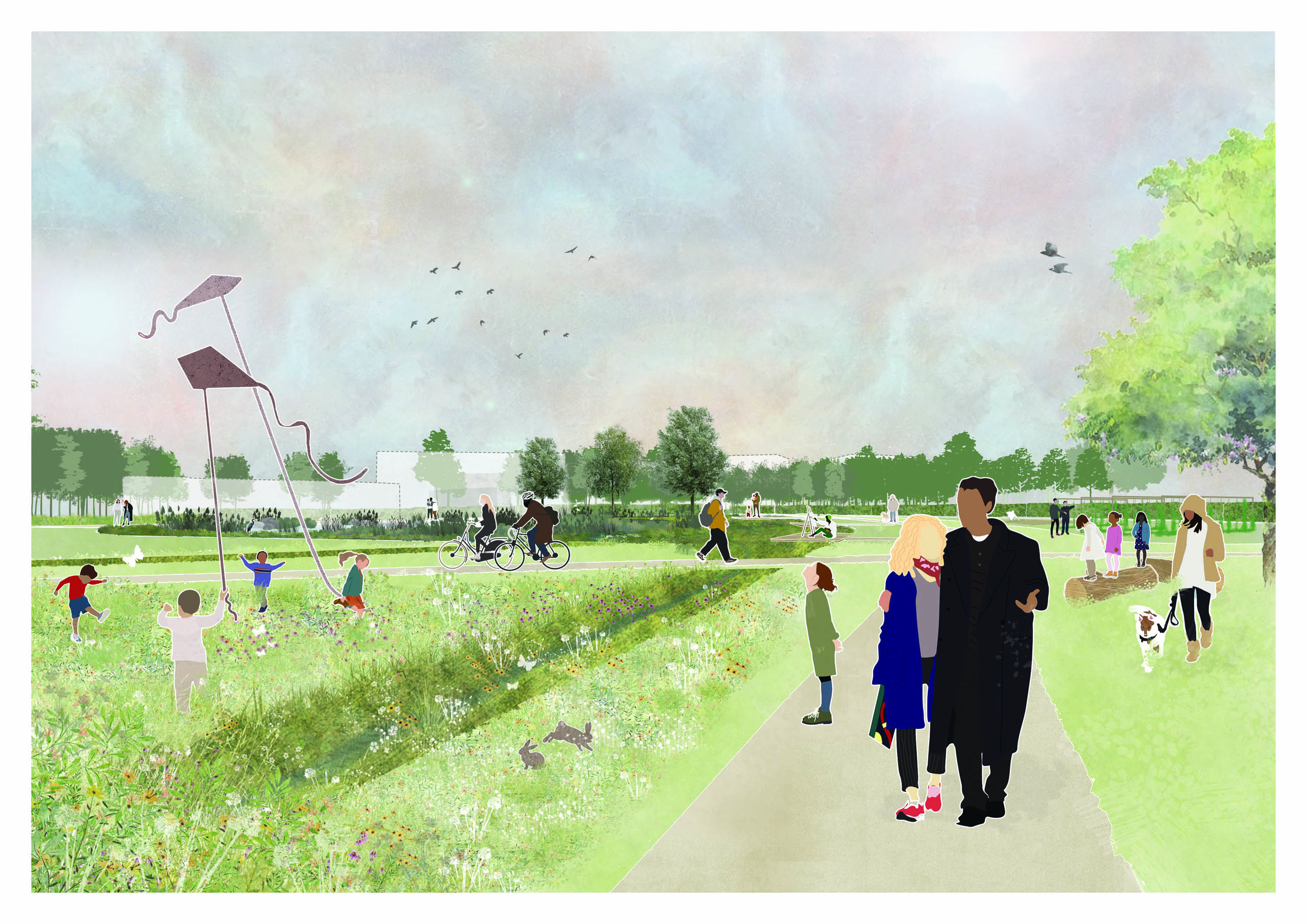
As well as the connected green infrastructure of pathways and linear ecosystems - connecting both wildlife and the RAU’s future inhabitants to all parts of the campus, the sustainable drainage design responds sensitively to the site’s subtle topography and existing character. We believe the energy of the heightened seasonal changes and new biodiversity will help to encourage people into their landscape, stir their senses, and inspire creating thinking.
We really enjoyed engaging with stakeholders and the agricultural industry throughout the design process, with the project submitted for outline planning approval in March 2024 receiving planning consent in May 2026.
We can’t wait to see the Innovation Village start to take shape in the near future, and be filled with new habitats, wildlife and innovators!
Client: Royal Agricultural University
Architects: Architype
Landscape Budget: Confidential
Planning consent in 2025
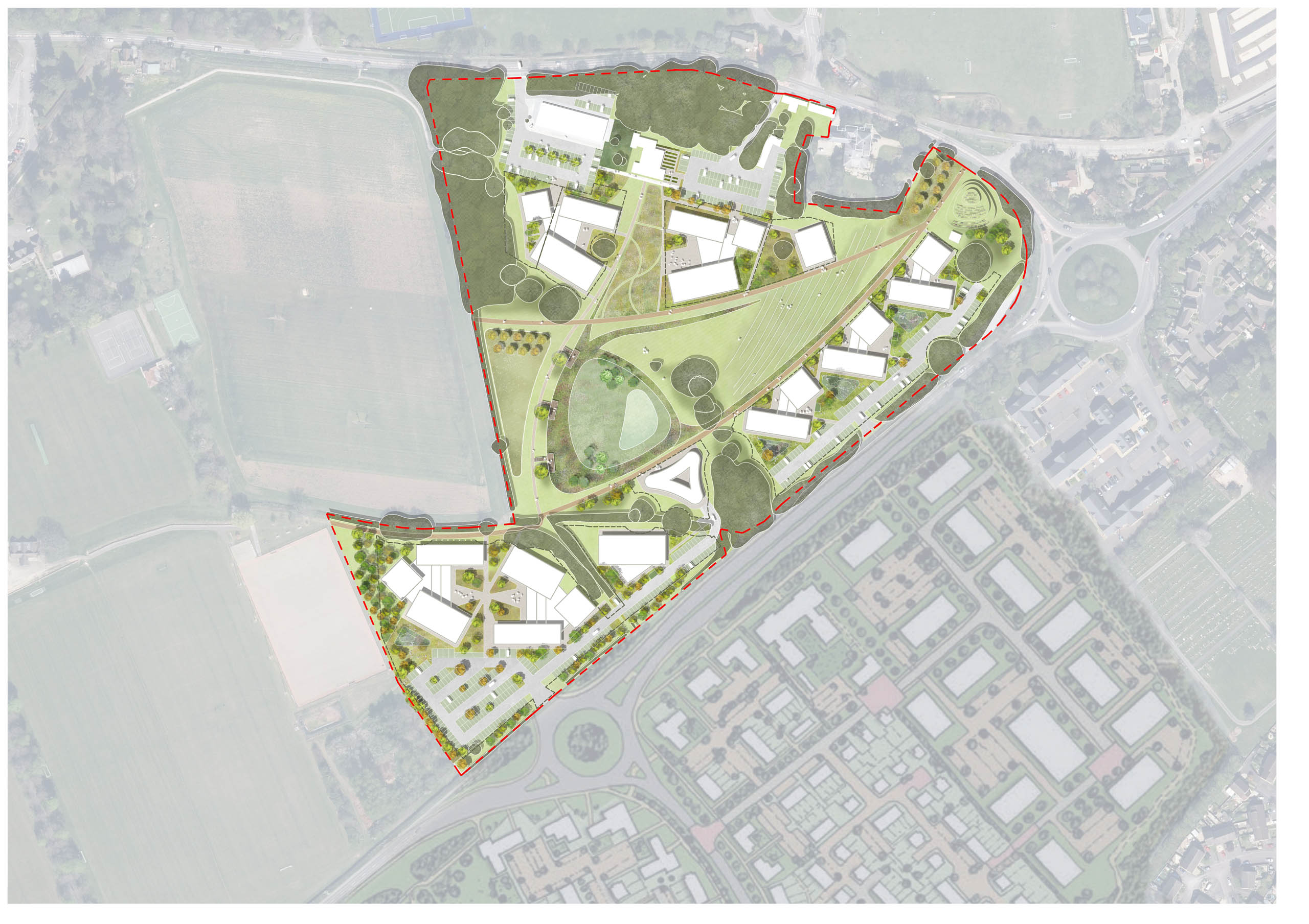
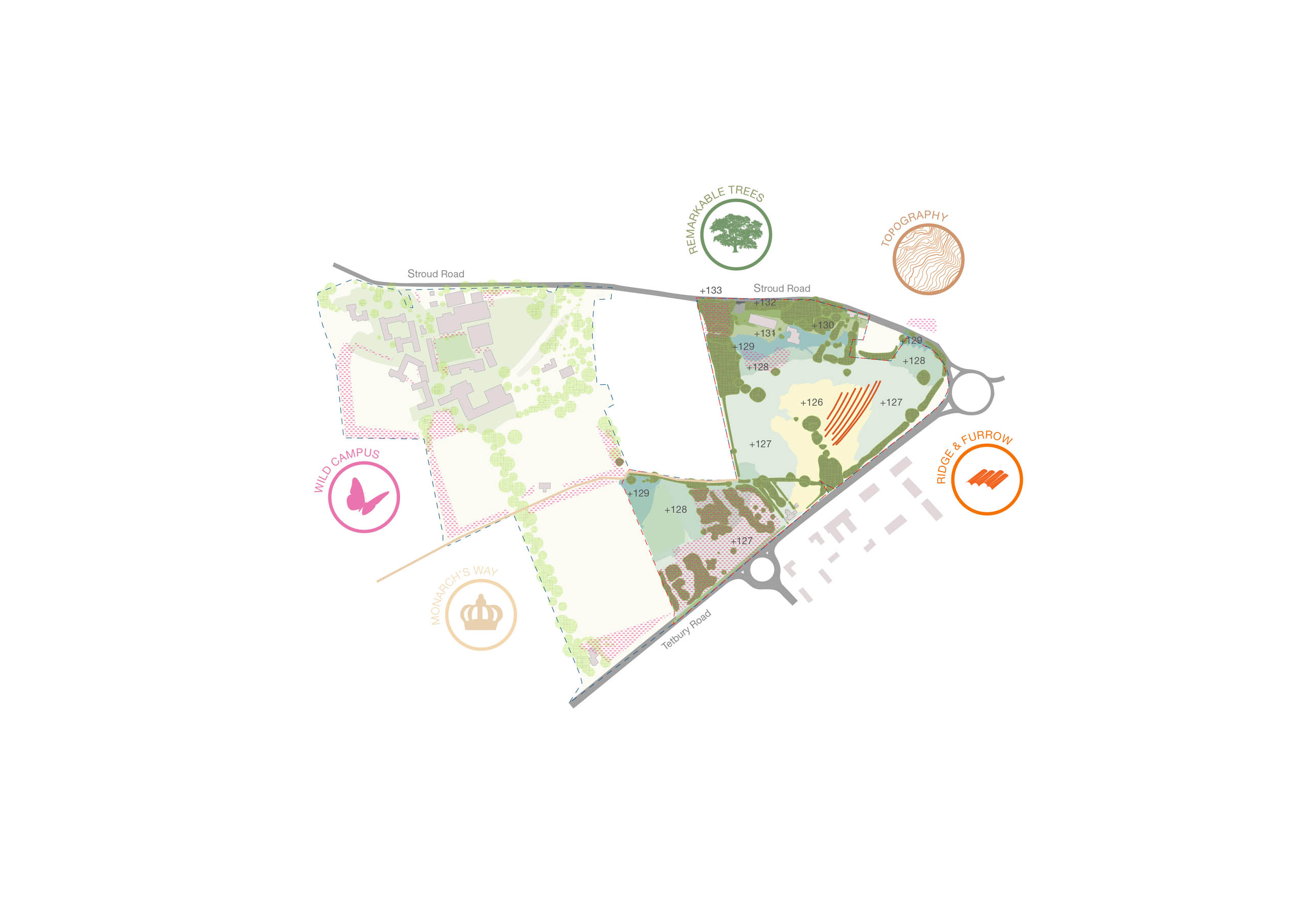
“This has been such an interesting site to explore and respond to - resulting in a landscape led scheme that respects the setting, historic built form, ecology, subtle topography (including traces of ridge and furrow field pattern), and hydrology. All carefully considered and embraced to provide an inspiring setting for rural innovation”
Guto Jones – Senior Associate Landscape Architect